V.E. Schwab
Fiction 2020 | 448 pages

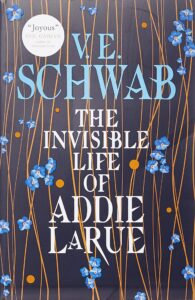
A page-turner! Every time I read a few sentences, I was challenged to put this book down.
On July 29, 1714, Addie LaRue is supposed to marry. Desperate to get out of the marriage and to control her own life, she makes a deal with the devil, Luc (yes, short for Lucifer). She trades her soul for immortality, but of course, the "deal" is not as simple as that. For the duration of her immortal life, she cannot be remembered. As soon as she walks away from a person she met, conversed with, shared a bed with, inspired, was healed by, learned from .... the other person can no longer remember her. At first blush, we can see how lonely this is; she is unable to establish relationships. What is not immediately apparent are the nuances. She cannot hold a job (who is this woman in my shop?) nor rent a place to live. She cannot leave a mark .... anything she writes or draws disappears within moments. And she cannot say her name.
The first 50, 100 or more years of her life, therefore, are difficult beyond heart-breaking. She learns to survive by selling her body, stealing clothes and food, encountering violence, occasionally finding shelter in abandoned derelict buildings.
V.E. Schwab's profound writing transports us back and forth between the first 300 years of Addie's life after the devil's curse, and the most recent two years, 2013-2014, in New York City. We vividly witness the industrial revolution, numerous wars including the two World Wars, changes in fashion and culture and work, the growth and expansion of technology and the world's population. There is a constancy in our sense of world history in this novel, experienced through the eyes of just one woman.
Sporadically, sometimes just a year apart, sometimes decades apart, Luc appears in Addie's life on July 29. Stubborn and steadfast, Addie refuses to turn over her soul to him, choosing to stay alive, no matter how tormenting the cost.
And then on March 12, 2014, she meets Henry at the bookstore where he works, The Last Word, and everything shifts.
Without hesitation, this book comes with my recommendation. I am eager to read your thoughts!
May 2022
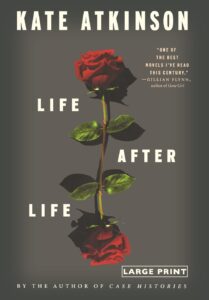 Ursula Todd is born in England on a very snowy evening, February 10, 1910. Except she is strangled by her umbilical cord and dies.