
Glenn Dixon
Fiction 2026 | 210 pages

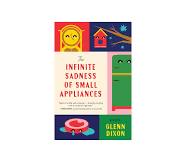
Great title, isn't it?
Our setting is a few years in the future and our appliances can talk with each other and get the services they need. Fridge, for example, does his own inventory and orders food which just appears. The clothes washer turns on when it senses the tub is full, washes, dries, and folds the laundry ... but it cannot carry it up to the humans' rooms. But our main character is Scout, an advanced Roomba who named herself after Scout in To Kill a Mockingbird, when she heard Harold reading aloud to Edie, his wife of 45 years, as she lay dying.
The appliances have responsibilities. Scout is to keep floors clean and, with her extending neck, keep the house dusted. But they all also have a responsibility to take care of their humans and keep them safe.
The Grid is the big brother/AI force that manages everything. It knows how many people live in each house, and has broad responsibility for the appliances, the roads, the allocation of resources, the rules that keep society running smoothly. Nothing gets past The Grid.
Early in the book, Edie dies of cancer. All the small appliances know what will happen next. The Grid will decide that Harold cannot continue to live in the house he has lived in for 45 years, because the square footage is too high for a single person. So, The Grid will begin the process of moving Harold to an assisted living facility or a nursing home, since he is also old.
But first, The Grid will take all the antiquities. It begins by removing Edie's heirloom china, but soon it will go after Harold's much more valuable antiquities, the first- and second- edition books he collects and repairs. The Watch, who is in charge of this home, makes an error and arranges for removal of the piano, which causes injury to a Harold when he attempts to save it. The Watch is permanently sanctioned and exists no more.
The small appliances continue to try and create the good life for Harold, for the rest of the book.
The Infinite Sadness of Small Appliances is a completely delightful book ... quirky, clever, funny, light ... and yet it covers a serious topic in this day and age. All the characters are warm and engaging, but none so much as Scout, who is naive, and lovable, especially as she tries to feel and understand human emotions. Unequivocally, I recommend this short book.
September 2026